Carrelage grand format à Nice : ce qu'il faut savoir avant de commander
Le grand format séduit. Dans les showrooms, c'est souvent ce qui attire l'œil en premier. Moins de joints, plus de matière, une lecture de l'espace plus fluide et contemporaine.
Mais c'est aussi un choix qui engage. Mal préparé ou mal posé, un carrelage grand format peut devenir source de fissures, de décollements, ou simplement de déceptions. Avant de commander, voici ce qu'il faut vraiment savoir.
C'est quoi, un carrelage grand format ?
On parle de grand format à partir de 60×60 cm. Au-delà, on entre dans le territoire du très grand format : 80×80, 100×100, 60×120, 120×120, et même des dalles atteignant 120×240 cm.
Le matériau de référence pour ces grandes dimensions, c'est le grès cérame. Il offre une stabilité exceptionnelle, une très faible porosité, et une grande variété d'effets : marbre, béton, pierre naturelle, travertin, bois. Beaucoup de nos clients sont surpris de voir à quel point les imitations actuelles sont convaincantes, surtout en grand format, où la matière prend une tout autre dimension.
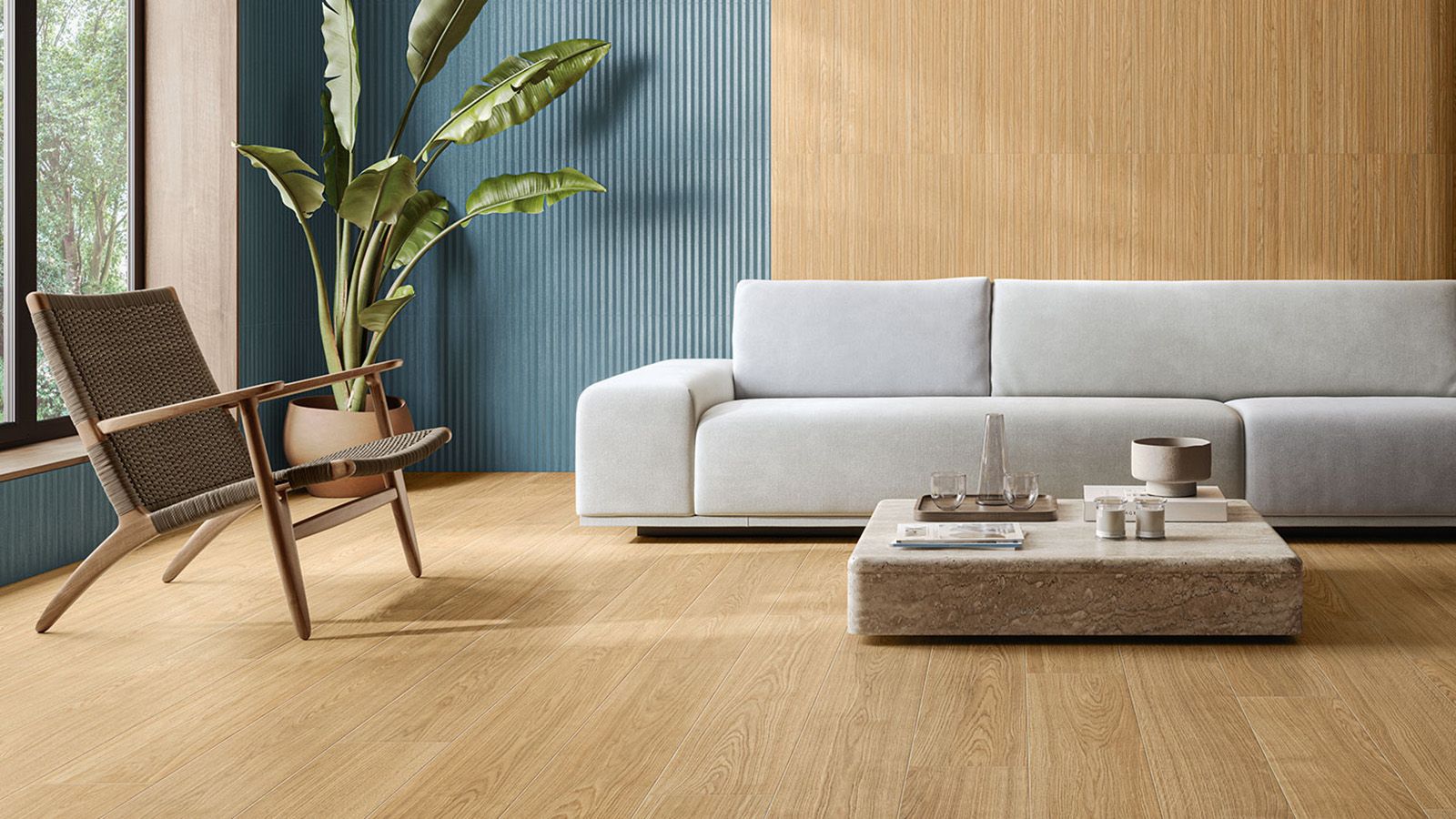
Pourquoi le grand format transforme un espace
L'effet le plus immédiat : la réduction des joints.
Moins de joints visibles, c'est une surface qui paraît plus continue, plus uniforme. L'œil n'est pas morcelé. L'espace semble plus grand, plus lumineux, plus apaisé.
C'est particulièrement vrai dans les petites pièces. Contrairement à ce qu'on pourrait penser, le grand format n'est pas réservé aux grandes surfaces. Posé dans une petite salle de bain ou un couloir étroit, il peut donner une impression d'espace remarquable.
Sur les murs, l'effet est tout aussi fort. Un grand format posé verticalement dans une douche à l'italienne allonge visuellement les murs et donne une sensation de hauteur sous plafond.
Ce qu'il faut vérifier avant de commander
C'est ici que beaucoup de projets dérapent. Choisir un grand format, c'est accepter des contraintes techniques qui n'existent pas avec un carrelage standard. Voici les points à vérifier impérativement avant de passer commande.
Le support doit être parfaitement plan
C'est la contrainte numéro un. Le grand format amplifie la moindre irrégularité du sol. Là où un carrelage classique peut tolérer de petites variations, une grande dalle les rendra immédiatement visibles et pourra même se fissurer avec le temps.
La tolérance admise est de 5 mm maximum sous une règle de 2 mètres. Au-delà, un ragréage est obligatoire avant la pose.
En rénovation, cette étape est souvent sous-estimée. C'est pourtant elle qui conditionne tout le reste.
Le double encollage est obligatoire
Pour les formats au-delà de 30×30 cm, le simple encollage du support ne suffit pas. Il faut encoller à la fois le support et le dos du carreau, c'est ce qu'on appelle le double encollage. Sans ça, des bulles d'air se forment sous la dalle. À terme : sons creux, décollements, fissures.
Une colle adaptée est également indispensable. Pour les grands formats, il faut utiliser une colle flexible de type C2S, formulée pour résister aux tensions liées à la taille des dalles.
Les joints de dilatation ne sont pas facultatifs
Une structure en béton se dilate et se rétracte selon les températures. Le carrelage aussi. Sans joint périphérique pour absorber ces mouvements, le carrelage peut se soulever ou se fissurer, surtout en extérieur sur la Côte d'Azur, où les écarts thermiques entre été et hiver sont importants.
Prévoir un joint de dilatation en périphérie de pièce est une règle de base. Sur les grandes surfaces (au-delà de 40 m²), des joints de fractionnement tous les 8 mètres environ sont également recommandés.
La pose n'est pas un travail solo
Un grand carreau, c'est lourd. Certaines dalles atteignent 20 à 30 kg. La manipulation exige au minimum deux personnes, des ventouses de carreleur, et du matériel adapté. Ce n'est pas un chantier à improviser seul un week-end.
Le calepinage : l'étape que beaucoup oublient
Le calepinage, c'est le plan de pose. C'est décider, avant de coller quoi que ce soit, où commencent et finissent les carreaux, comment sont réparties les découpes, et dans quel sens sont orientées les dalles.
C'est une étape que beaucoup de particuliers négligent. C'est pourtant elle qui fait la différence entre un sol banal et un résultat vraiment abouti.
Quelques principes clés :
L'orientation par rapport à la lumière. En règle générale, le carrelage se pose perpendiculairement à la principale source de lumière naturelle. Cela maximise la réflexion lumineuse et rend l'espace plus lumineux.
Le point de départ. Sur les grandes surfaces, on commence souvent au centre de la pièce, pour que les découpes en périphérie soient symétriques et équilibrées. Une découpe trop fine contre un mur, ça se voit immédiatement.
La pose à blanc. Avant d'encoller, il est fortement conseillé de disposer les carreaux sans colle pour visualiser le rendu, repérer les différences de teintes d'un carton à l'autre, et ajuster si nécessaire.
La couleur des joints. Pour les grands formats, un joint ton sur ton, de la même couleur que le carrelage, renforce l'effet de dalle continue. Un joint contrasté, lui, attirera l'œil sur les joints plutôt que sur la matière.
Quel format pour quelle pièce ?
Salon et séjour: Le grand format est dans son élément ici. Un 80×80, un 60×120 ou un 120×120 cm crée une continuité visuelle très élégante, particulièrement dans les espaces ouverts. Préférez une finition mate ou légèrement satinée pour un rendu contemporain.
Salle de bain: Le grand format est très tendance en salle de bain, notamment sur les murs de douche. Un 60×120 posé verticalement agrandit visuellement la pièce. Attention à l'antidérapance au sol : vérifiez la classification R du carrelage avant de choisir.
Cuisine: Au sol, le grand format fonctionne très bien. Il est facile d'entretien et résistant à l'usage quotidien. En crédence, un grand format mural avec très peu de joints donne un rendu épuré et très actuel.
Entrée et couloirs: Le grand format posé dans le sens de la longueur allonge visuellement l'espace. C'est un effet simple et efficace, particulièrement apprécié dans les appartements niçois aux couloirs étroits.
Terrasse: Le grand format en extérieur demande des carreaux spécifiques : résistance au gel, traitement antidérapant, épaisseur adaptée (au moins 2 cm). Vérifiez systématiquement la classification extérieure du carrelage avant de commander.
Les erreurs à éviter absolument
Ne pas faire vérifier le support avant de commander. Le ragréage peut prendre du temps et entraîner des coûts supplémentaires. Mieux vaut le savoir avant.
Sous-estimer la quantité. Avec les grands formats, les chutes de découpe sont plus importantes qu'avec un carrelage standard. Prévoir 10 à 15 % de surplus est une règle de base, jusqu'à 20 % si la pose est complexe ou si la pièce a beaucoup d'angles.
Choisir sans voir le carreau en vrai. Un carrelage grand format sur un écran ou une petite image, c'est trompeur. Les nuances, la texture, le rendu sous la lumière méditerranéenne, tout ça ne se juge vraiment qu'en showroom, à taille réelle.
Choisir un carrelage extérieur non adapté au climat. Sur la Côte d'Azur, les terrasses sont exposées au sel de l'air marin, aux rayons UV intenses et aux variations thermiques. Tous les grands formats ne sont pas conçus pour ces conditions.
Vous avez un projet avec du carrelage grand format ?
Le choix du format, du matériau, de l'orientation, de la colle et du calepinage, tout est lié. Un mauvais choix à une étape peut compromettre le reste.
Nos conseillers vous aident à cadrer votre projet de A à Z, avec plus de 20 ans d'expérience dans les matériaux et la rénovation sur la Côte d'Azur. Grands formats en grès cérame, effet marbre, béton ou pierre naturelle, venez voir les collections à taille réelle dans notre showroom à Nice. C'est souvent là que le projet prend vraiment forme.